
Chronic Postsurgical Pain Post Cardiac Surgery
A recent publication from SickKids has published the prevalence of chronic pain in the congenital cardiac population after surgery. Based on surveys sent to patient who had undergone surgery, the prevalence of chronic post -surgical pain was found to be similar to the prevalence seen in all surgeries, approximately 20%. Data on chronic pain in […]
Registration is Open! SPPM 2024 Global Virtual Conference

You are invited to attend to the 2nd Biennial SPPM Global Conference. The virtual program will highlight “What’s Trending Worldwide in Pediatric Pain Medicine.” Click here for more information.
In-Person Versus Virtual Visits for Chronic Pain, A Systematic Review
Dr. Katie Birnie and team have recently published a review to examine the efficacy of interventions that are delivered in-person versus virtually for youth with chronic pain, a shift that occurred during the pandemic and has persisted in some forms in many chronic pain programs. Follow the link for the full review, that identified major […]
Postdural Puncture Headaches in Pediatric Patients: A Review of Options When Repeated Epidural Blood Patches Do Not Work

A fascinating case report authored by several SPPM members – what is the next step for postdural puncture headache when blood patches are ineffective? Read here to see what was offered to one particular patient: https://www.cureus.com/articles/245081-postdural-puncture-headaches-in-pediatric-patients-a-review-of-options-when-repeated-epidural-blood-patches-do-not-work#!/
Call for Submissions – SPPM 12th Annual Meeting
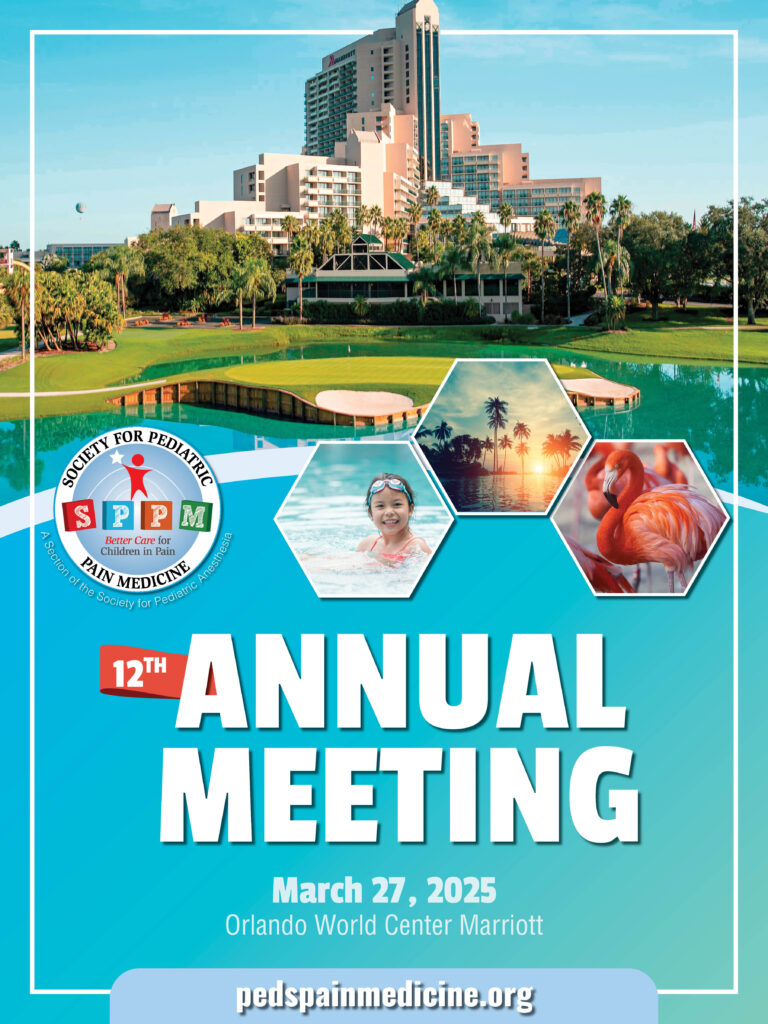
Do you have an idea for a Workshop, Round Table, or Problem-Based Learning Discussion (PBLD) that would benefit the Society for Pediatric Pain Medicine membership? If so, please see the requirements and submission information below for the SPPM 12th Annual Meeting. Click here for more information.