Association Between Intraoperative Opioids and Postoperative Pain
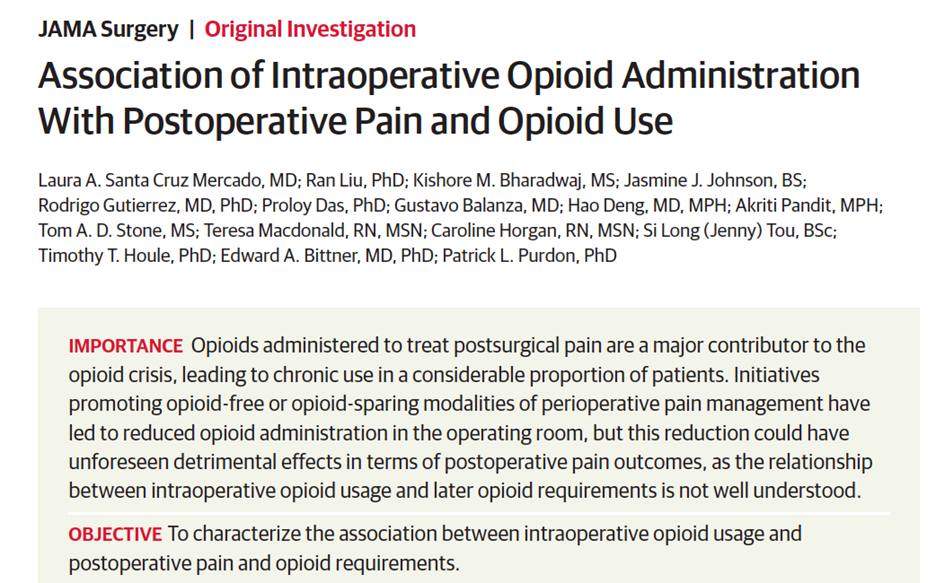
A new study in JAMA surgery assesses whether limiting opioids during surgery has any impact on postoperative pain and opioid consumption. The paper concluded that liberal use of opioids intraoperatively, specifically fentanyl, was associated with lower frequency of uncontrolled pain; a decrease in new chronic pain diagnoses reported at 3 months; fewer opioid prescriptions at […]
How To Help Your Pediatric Chronic Pain Patient Attend School When Living with Migraine Pain

U.S. Pain Foundation serves patients living with chronic pain and will be hosting a session on helping children suffering from migraines. On August 22, from 7-8pm ET, Jennifer Grobe, Esq., will discuss Individualized Education Plans, 504 plans, eligibility criteria, and how to request such accommodations. A potentially useful session to share with our pediatric chronic […]
Error Traps and Preventative Strategies for Adolescent Idiopathic Scoliosis Surgery
Congrats to SPPM members Drs. Vidya Chidambaran and Sophie Pestieau for their recent publication on error traps in AIS surgery! The paper reviews many critical aspects of scoliosis management including the “ failure to optimize postprocedure recovery using enhanced recovery after surgery (ERAS) approaches and preoperative optimization”. Read the article here: https://onlinelibrary.wiley.com/doi/epdf/10.1111/pan.14735
ICD-11 Task Force Is Seeking Opinions on Pediatric Specific Chronic Pain Diagnosis
The ICD-11 Task Force of IASP’s Pain in Childhood SIG invites you to share your opinion on the need for pediatric specifications in the ICD-11 chronic pain diagnoses. The inclusion of an independent category for chronic pain in the 11th version of the International Classification of Diseases (ICD-11) has been an important step towards the […]
Substance Use Disorders in Adolescents and Young Adults

Congratulations to SPPM’s Advocacy Committee for their recent publication in Anesthesia & Analgesia on the management of substance use disorders in adolescents and adults! Kudos to our Board Members Drs. Jamie Kitzman and Amber Borucki and SPPM Past President Dr. Rita Agarwal. Follow the link to read the paper: https://journals.lww.com/anesthesia-analgesia/Fulltext/9900/Substance_Use_Disorders_in_Adolescents_and_Young.608.aspx